A quality paver installation can last for decades, but the surface itself needs regular protection to keep looking its best against the intense sun exposure, occasional heavy rain, and everyday wear that come with life in the Santa Clarita Valley. Santa Clarita Pavers provides professional paver sealing for patios, driveways, walkways, and pool decks throughout Santa Clarita, restoring color vibrancy, locking joint sand in place, and adding a protective barrier that extends the life of your hardscape investment.
Sealing isn’t just a cosmetic upgrade, though the difference in appearance is often dramatic. A quality sealer protects pavers from UV fading, resists staining from oil and other spills, helps prevent weed growth between joints, and makes routine cleaning significantly easier. For a surface that represents a real investment in your property, sealing is one of the most cost-effective ways to protect that investment over the long run.
Why Sealing Matters in Santa Clarita’s Climate
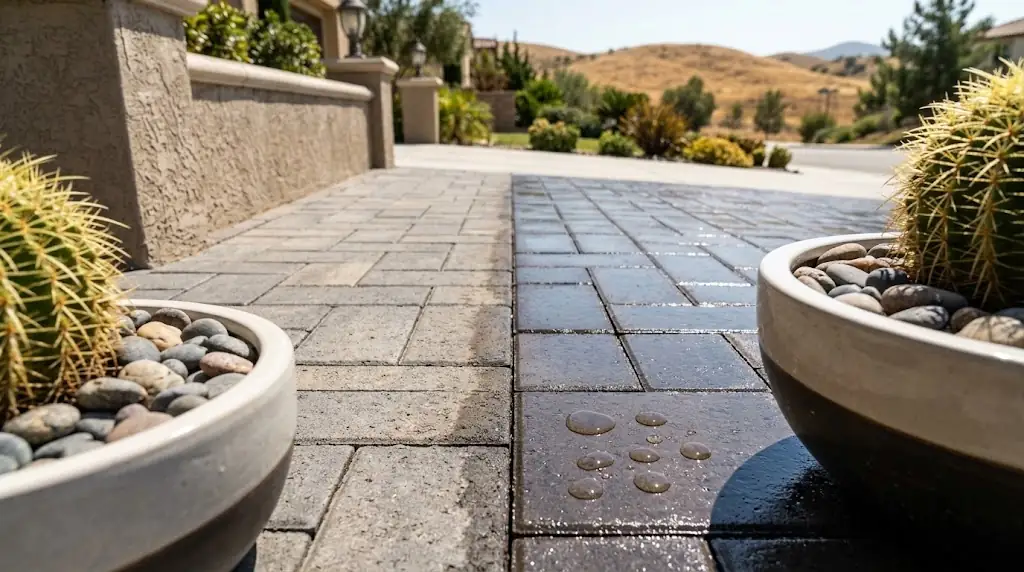
Few places test a paver surface’s UV resistance quite like the Santa Clarita Valley, where pavers can be exposed to intense, direct sunlight for the better part of the year. Over time, unsealed pavers gradually fade and lose the rich color and contrast they had on installation day. A quality sealer contains UV inhibitors that significantly slow this fading process, helping your patio, driveway, or pool deck hold onto its original color and finish far longer.
Sealing also plays an important role in joint stability. Polymeric sand, the material used to lock pavers together and resist weed growth, can gradually erode from wind, rain, and regular foot or vehicle traffic. A proper seal helps stabilize that joint sand, reducing the frequency of resanding and keeping pavers locked tightly in place.
Benefits of Professional Paver Sealing
- UV protection that slows fading from constant Southern California sun exposure
- Stain resistance against oil, grease, rust, and other common driveway and patio spills
- Joint sand stabilization that reduces sand loss and weed growth between pavers
- Enhanced color and finish, with options ranging from natural matte to a wet-look glossy finish
- Easier long-term cleaning, since sealed surfaces resist dirt and grime penetration
- Reduced efflorescence, the white mineral haze that can develop on concrete pavers over time
Together, these benefits mean a sealed surface not only looks better immediately after treatment, it stays looking better for years to come compared to an unsealed one.
Sealer Options for Every Surface
Different areas of your property often call for different sealer types, and we help you choose the right option based on how each surface is used:
- Wet-look/gloss sealers that enhance color saturation and add a rich, polished finish, popular for patios and pool decks
- Natural/matte sealers that provide protection while preserving a more understated, natural paver appearance
- Enhancing sealers that deepen and enrich paver color without adding significant sheen
- Slip-resistant additives, especially important for pool deck and walkway applications where wet surfaces are a safety concern
For pool decks and other wet-prone areas, we always recommend a sealer formulated with slip-resistant properties, prioritizing safety without sacrificing the finished look.
Our Paver Sealing Process
- Surface inspection – We assess the current condition of your pavers, joints, and any existing sealer.
- Deep cleaning – The surface is thoroughly cleaned to remove dirt, algae, efflorescence, and any prior sealer buildup.
- Repairs as needed – Loose or damaged pavers are addressed before sealing to ensure a clean, even final result.
- Joint sand replenishment – Polymeric sand is topped off in any eroded joints prior to sealing.
- Drying period – The surface is allowed to fully dry to ensure proper sealer adhesion.
- Sealer application – Sealer is applied evenly using professional-grade equipment for consistent coverage and finish.
- Curing and final inspection – We allow proper curing time and do a final walkthrough to confirm even coverage and finish quality.
Most residential sealing projects are completed within a day or two, with a short curing period afterward before the surface is ready for full use.
How Often Should Pavers Be Sealed?
Sealing frequency depends on the sealer type used, sun exposure, and how heavily the surface is used, but most residential paver surfaces in Santa Clarita, CA benefit from resealing every two to three years. Driveways and pool decks, which see heavier use and more direct exposure, may benefit from slightly more frequent attention than a lightly used side walkway. We can help you establish a sealing schedule tailored to your specific surfaces during your estimate.
Protecting an Investment You’ve Already Made
Whether we installed your pavers or another contractor did, sealing is one of the simplest ways to protect the money you’ve already invested in your outdoor hardscape. It’s a fraction of the cost of eventual repairs or replacement, and the visual improvement alone, restored color, reduced staining, a clean and finished look, makes it one of the most noticeable upgrades for the investment.
Why Choose Santa Clarita Pavers
We use professional-grade sealing products suited to Southern California’s UV exposure and climate conditions, and we prepare every surface properly before application, because sealing over dirt, algae, or old degraded sealer never produces a lasting result. Our team has sealed patios, driveways, walkways, and pool decks throughout Santa Clarita, Valencia, Newhall, Saugus, and Canyon Country, and we’re happy to advise on the right sealer type for your specific pavers and how they’re used.
Schedule Your Paver Sealing Today
Protect your hardscape investment and bring back that just-installed look. Contact us today to schedule your free sealing estimate and find the right maintenance plan for your property.